
A teddy bear sewn from the fabric of a suitcase becomes a double transitional object. It simultaneously embodies the prospect of departure and the need for attachment. When home is not necessarily a stable point in space, this object becomes a mobile anchor.
Throughout the journey, acts of diligence, play, and surrender to the material are repeated. The home becomes a compilation of gestures, objects, and habits. In the final iteration, it takes shape from materials collected from the previous generation’s home — bureaucratic documents, saved pages, marks, old boards, kitchen towels, and remnants of everyday life.
In this way, the house is constructed over the course of the iteration. At the beginning of the process, it enters the suitcase; by the end, it is sewn from memories and consolations gathered from another home. The transitional object expands into a transitional space.
The work passed from one artist to another in this order:
Ron Shahar –> Rotem Finkelstein –> Sheli Piha –> Roni Ben Porat –> David Mottahedèh –> Nadav Feiner –>
Michal Karniely

Photo by: Daniel Hanoch

Photo by: Daniel Hanoch

Photo by: Daniel Hanoch
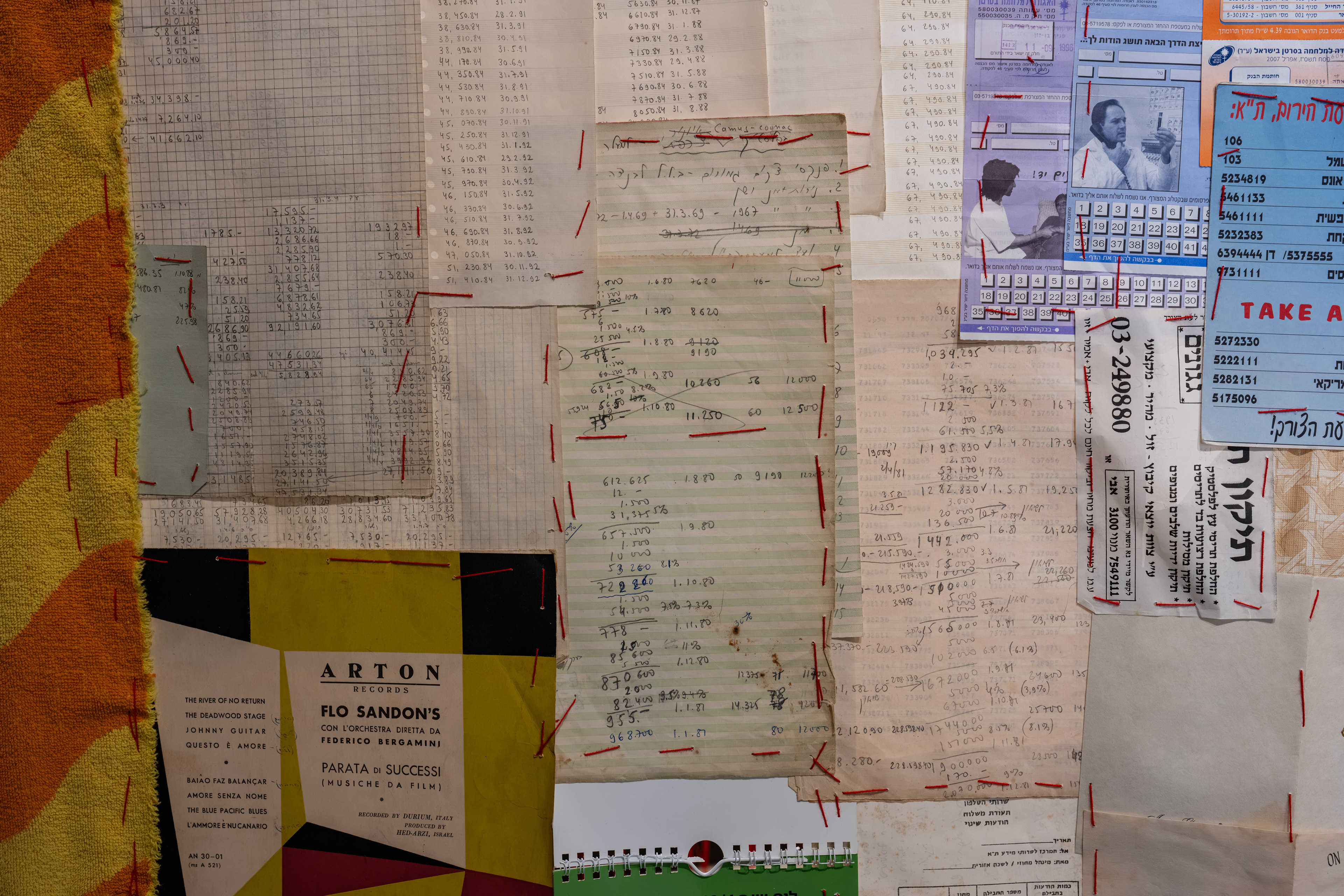
Photo by: Daniel Hanoch

Photo by: Daniel Hanoch
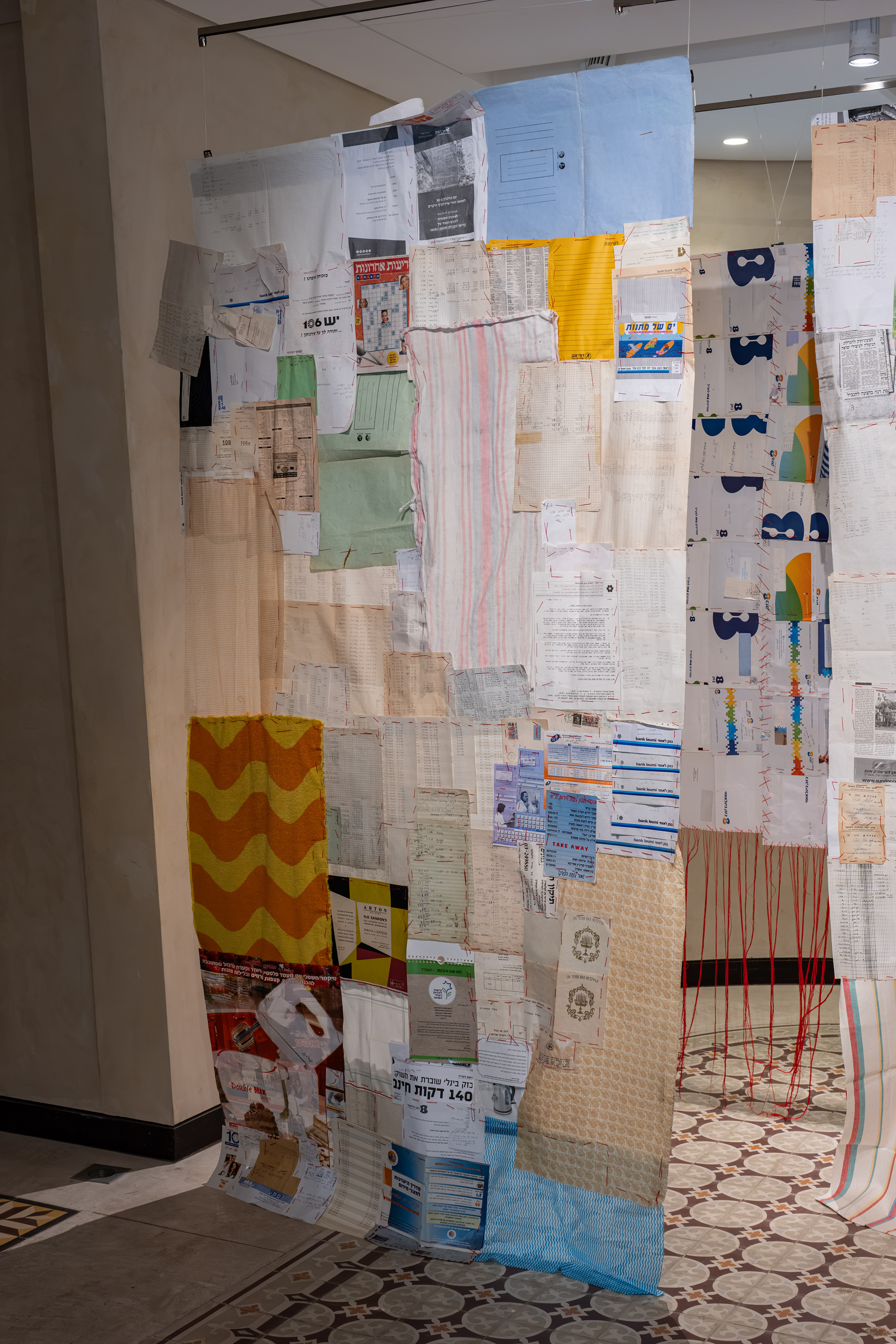
Photo by: Daniel Hanoch

Photo by: Daniel Hanoch

Photo by: Daniel Hanoch

Photo by: Daniel Hanoch
The Tel Aviv Biennale of Crafts and Design 2026 is, for the first time, leaving the confines of the Eretz Israel Museum and extending into the heart of Tel Aviv-Jaffa. This unique collaboration brings together the Third Biennale — whose title is drawn from Hesiod’s poem Works and Days — and the Edmond de Rothschild Center.
In the spirit of Hesiod’s poem, in which community and cooperation play a central role, we sought to work within an existing fabric of community: seven artists, all members of the Edmond de Rothschild Center’s network, who contributed to the exhibition not only their individual talents but also a sense of belonging that had developed well before the exhibition began.
The Retraced exhibition captures a moment within a shared, cyclical process, a moment when the boundaries between creation and destruction become blurred. Acts of creation and renewal exist alongside dismantling and disruption, together creating a living ground for continual transformation. The work process does not strive toward completion or finality; the works trace the ceaseless movement between constructive and destructive forces. Previous layers, materials, textures, memories, and remnants blend into the present fabric, creating a multilayered narrative in which construction and destruction converge in a single gesture of renewal — one that highlights the potential within the absent and the creative force concealed within destruction.
For several months, the works passed from hand to hand. The creators became interveners, the interveners, creators. Control dissolved, and artistic ownership unraveled. Thus emerged a space where individual creation became collective, while the collective was imbued with a new sense of individuality. The encounter between intention and outcome, and between control and release, invites the viewer to experience the beauty of the tension between the complete and the incomplete, and to see creation as a living, breathing process.
The seven works in the exhibition are seven iterations. Each has its own biography: a starting point, deviations, memories, loss and accumulation. Their state in the exhibition marks a momentary pause within an ongoing, never-ending process.